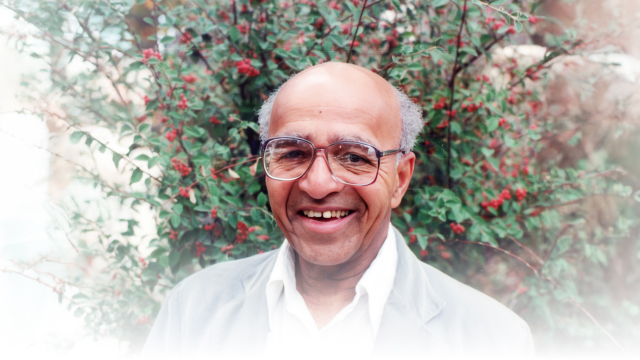
Portrait of David Harold Blackwell smiling, wearing glasses and a light gray jacket

David Harold Blackwell

April 24, 1919 – July 8, 2010

Mathematician, Statistician, and Pioneering Scholar

David Harold Blackwell was a trailblazing African American mathematician and statistician whose profound contributions to game theory, probability, and statistics left a lasting mark on both academic research and technology. As the first African American admitted to the National Academy of Sciences, Blackwell's work continues to empower and inspire.

"Basically, I'm not interested in doing research and I never have been. I'm interested in understanding, which is quite a different thing. And often to understand something you have to work it out yourself because no one else has done it."

David Harold Blackwell
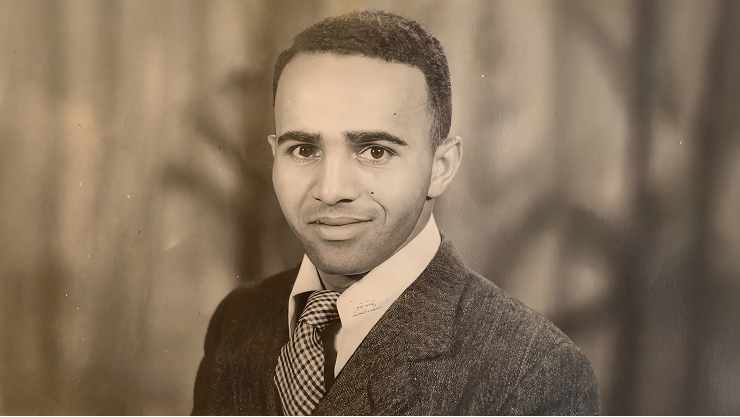
Portrait of young David Blackwell as a young man, wearing a suit and tie

Early Life and Background

Born in Centralia, Illinois in 1919, Blackwell grew up in a supportive family that encouraged his mathematical interests right from the start. His father, who had a fourth-grade education, was a railroad worker, and his mother a homemaker, grounded him in humility and ambition.

David's grandfather ran a store, and it was there that he taught himself to read by looking at the pictures and letters on seed packages.

Blackwell married his wife, Ann Madison Blackwell, in 1944. They had eight children and 14 grandchildren.

Education

Blackwell attended Centralia public schools, completing elementary school in six years instead of the usual eight. He described his high school education as "fabulous." While in high school he had his first publication, a solution to a problem that appeared in a mathematics magazine.

He enrolled at the University of Illinois at Urbana-Champaign at the age of 16, earning his bachelor's, master's, and Ph.D. in Mathematics by the time he was 22. He was awarded fellowships and scholarships throughout his academic career and was recognized for his extraordinary mathematical talent from an early age.

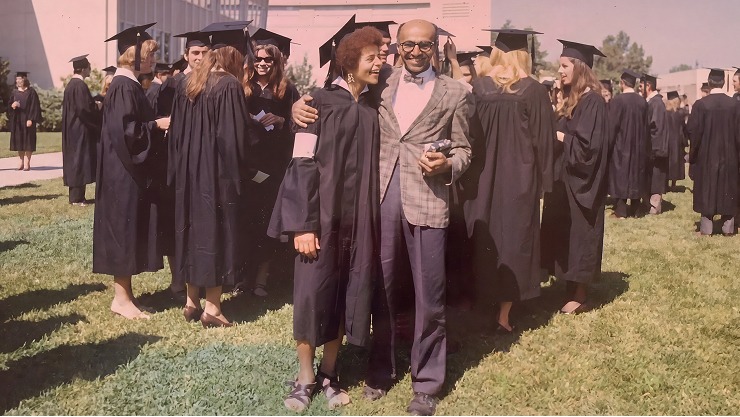
David Blackwell with a graduate at a university commencement ceremony
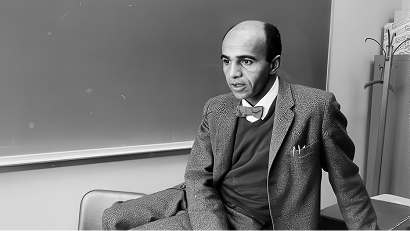
David Blackwell seated in front of a chalkboard, wearing a tweed jacket and bow tie

Career Journey

After completing his Ph.D., he won a fellowship to Princeton University's Institute for Advanced Study.

Blackwell faced discrimination but persevered, holding faculty positions at Southern University, Clark College, and Howard University, where he was made chairman of the mathematics department in 1947.

In the summers of 1946 and 1950, Blackwell worked at the Rand Corporation in Santa Monica.

In 1955, he became the first African American tenured professor at UC Berkeley, where he helped shape the Department of Statistics, serving as its chair for many years. He remained there for the rest of his career. Blackwell authored influential works such as "Blackwell's Theorem" and the "Blackwell-Rao Theorem."

Dr. Blackwell taught introductory- through graduate-level courses and mentored 65 doctoral students throughout his career.
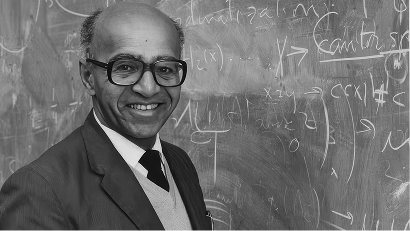
David Blackwell smiling in front of a chalkboard covered with mathematical equations

Achievements

In 1986, Blackwell received one of the most prestigious honors in the field of statistics, the R.A. Fisher award from the Committee of Presidents of Statistical Societies.

During his lifetime, he received 13 honorary doctorates, once noting that the two most important to him were from Howard University and the University of Illinois, as they knew him best. International degrees were awarded from the Universities of Lesotho and Warwick.

In 2014, Blackwell was posthumously awarded the National Medal of Science, the highest scientific award in the United States. The award was given by then-President Obama for "fundamental contributions to probability theory, mathematical statistics, information theory, mathematical logic, and Blackwell games, which have had a lasting impact on critical endeavors such as drug testing, computer communications, and manufacturing."

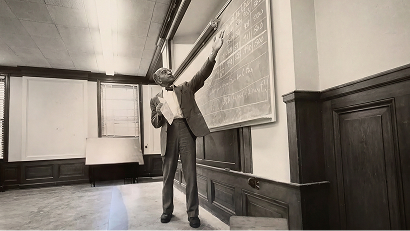
David Blackwell teaching at a chalkboard in a lecture hall, holding papers while writing

Impact of His Work

Blackwell's contributions to game theory and statistics have become foundational in modern mathematics. In 1954 he coauthored the book "The Theory of Games and Statistical Decisions" with Meyer A. Girshick. It established them as leaders in the field of game theory, which uses mathematics to understand winning strategies in situations that has been applied to everything from modern AI algorithms, economics, biology, and engineering to political science and international relations.

Throughout his career, he published 84 research papers, received the John von Neumann Theory Prize, and was the first African American elected to the National Academy of Sciences. His legacy endures in academic texts, classrooms, and high-tech domains.

In 2018, UC Berkeley opened a new dorm named after Blackwell, the university's first tenured African-American professor.

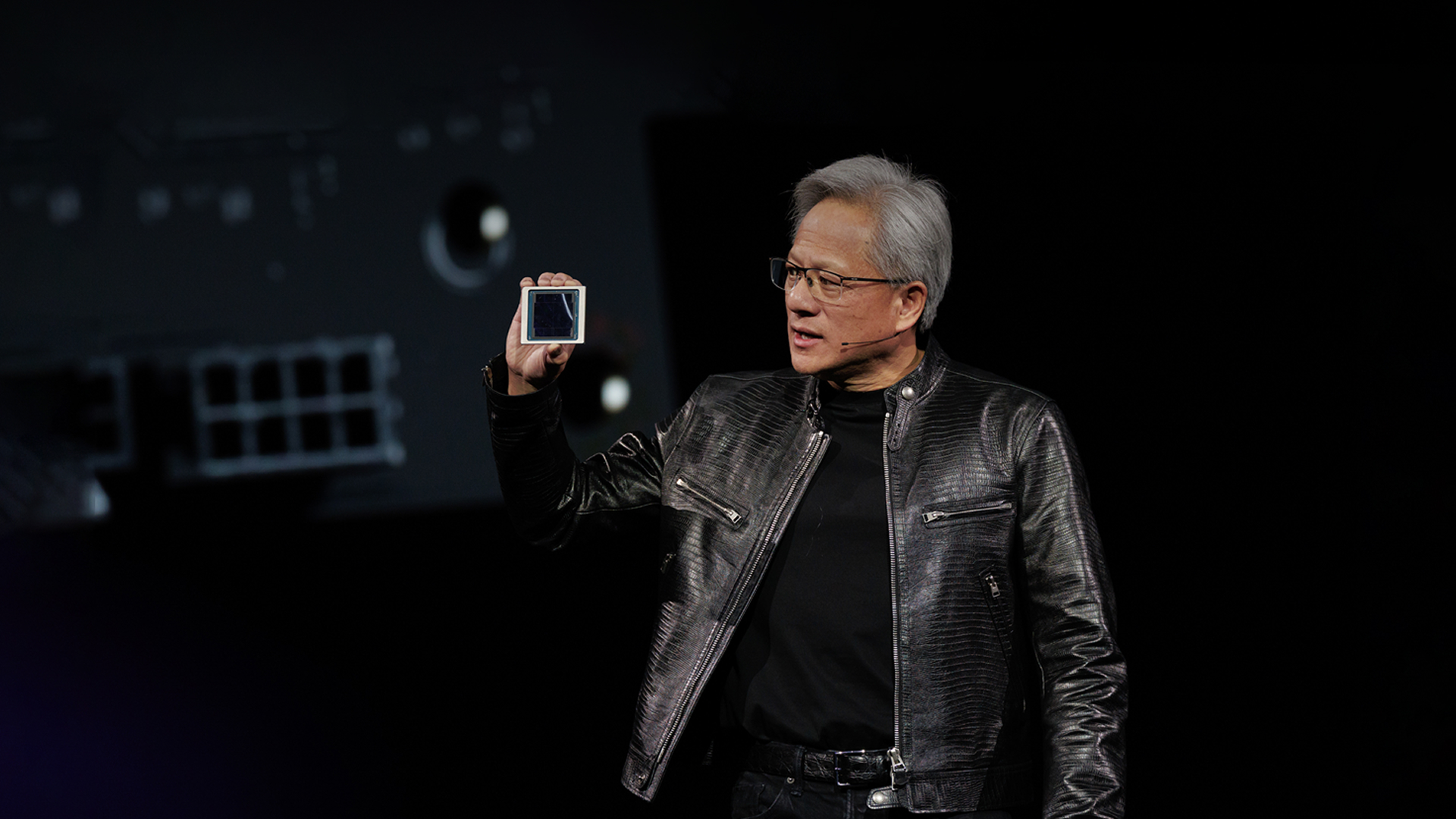
Jensen Huang announcing the Blackwell GPU architecture on stage

Inspired by His Work

In 2024, NVIDIA named its latest GPU architecture "Blackwell" in honor of David Harold Blackwell, continuing its tradition of celebrating mathematicians and scientists who have made transformative contributions to the world. This choice reflects Blackwell's enduring influence on probability theory and optimization, both crucial in modern computing and AI, and aims to inspire engineers and researchers to pursue boundary-pushing innovation.

"This GPU is named after David Blackwell, an American mathematician and statistician whose work has had a lasting impact in mathematics as well as the specific domain of AI," said NVIDIA CEO Jensen Huang.

"Mathematician. Game theorist. Probability," said Huang, about the computer scientist. "We thought it was a perfect name."

Jensen Huang announcing the Blackwell GPU architecture on stage

Connection to NVIDIA's GPU Architecture

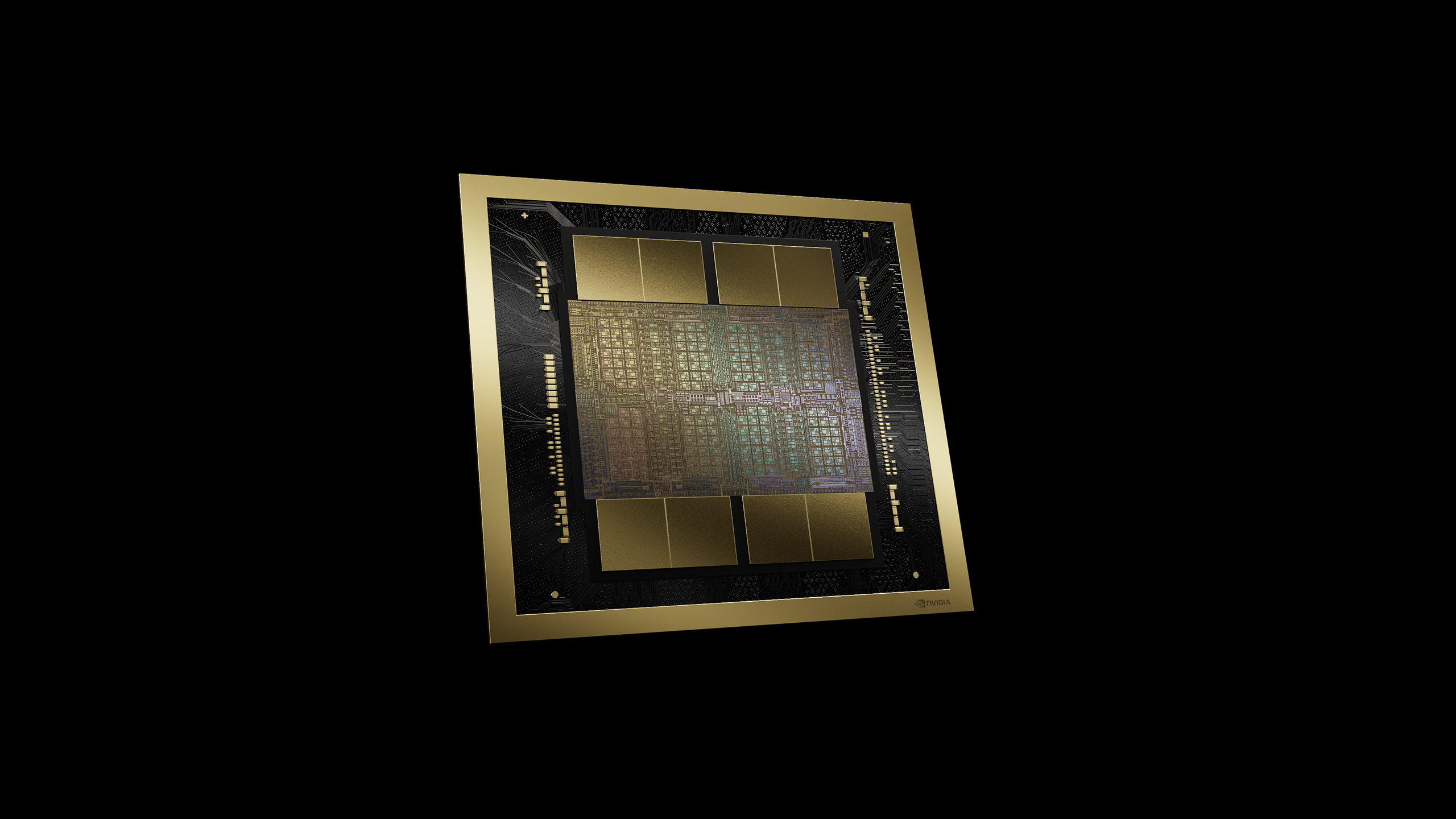
NVIDIA's Blackwell architecture represents a cutting-edge milestone in GPU design, setting new standards for AI and data center processing. The architecture embodies principles of scalability and efficiency, echoing Blackwell's mathematical innovations in decision-making and probability, and serves as the foundation for next-generation AI supercomputing.

NVIDIA Blackwell GPU die render showing the intricate chip architecture with gold-framed design

The Impact of Blackwell's Contribution to AI

David Blackwell's mathematical work laid the foundation for much of modern artificial intelligence. The Blackwell Approachability Theorem, developed in the 1950s, showed how repeated decisions could move toward desired results even in uncertain conditions. This idea became the basis of online learning, guiding how AI systems like Google's recommendation engines and NVIDIA's autonomous platforms make adaptive decisions.

Blackwell also co-created the Rao-Blackwell Theorem, which improves statistical accuracy by reducing variance—an idea still used in modern machine learning to make models more stable and precise.

He also developed foundational concepts in sequential decision-making independently and contemporaneously with Richard Bellman's dynamic programming. Though Bellman is cited more often, Blackwell's parallel breakthroughs were equally critical to what became reinforcement learning, now central to robotics, self-driving cars, and modern AI.

Through Bayesian decision theory, Blackwell provided ways for AI to update beliefs under uncertainty—essential for healthcare models, recommendation systems, and financial forecasting.

Despite his immense influence, Blackwell's contributions were long overlooked due to racial discrimination in academia. Today, as AI expands into every field, his work continues to shape how intelligent systems learn, adapt, and align with human values.

Preview the Film

Leza Blackwell, David Blackwell's granddaughter, is producing the first-ever documentary exploring his life and legacy.

Watch the Concept Reel:

Documentary film preview thumbnail

Get Involved

For news and updates on the film, or to discuss support opportunities, please contact us at: hello@GAMEofGENIUSfilm.com